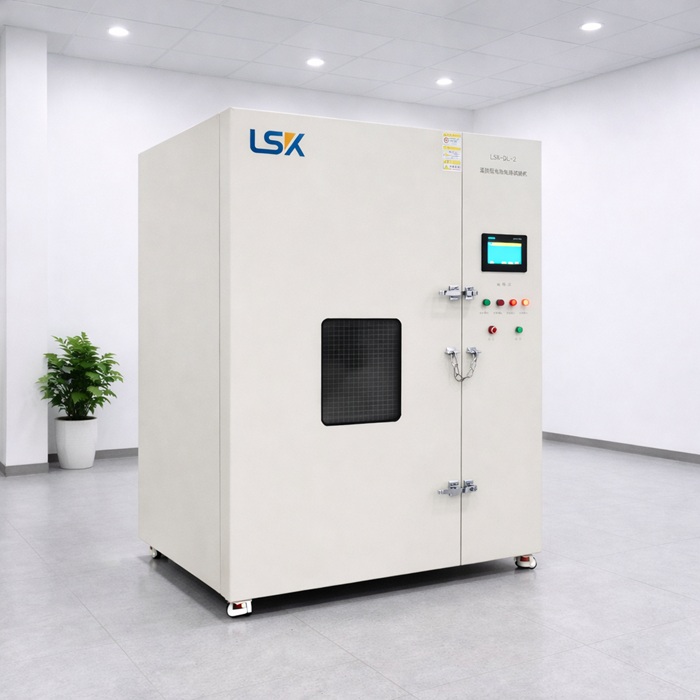
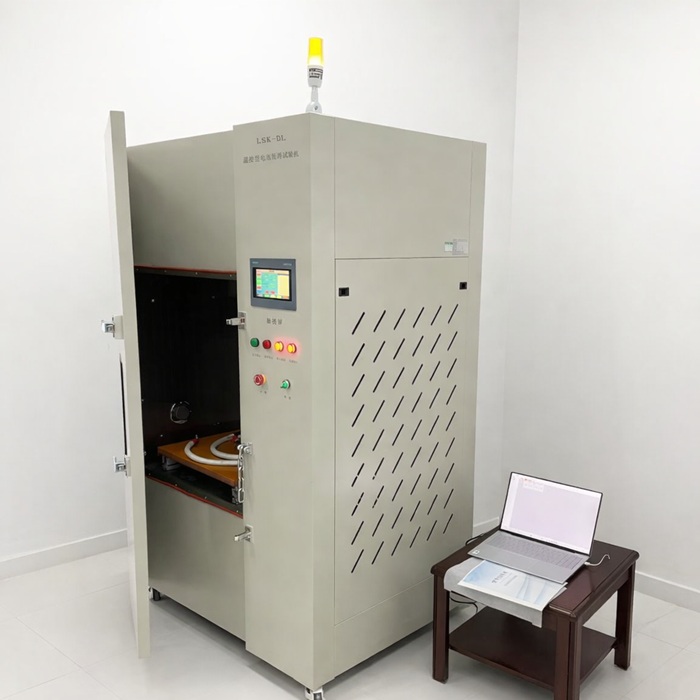
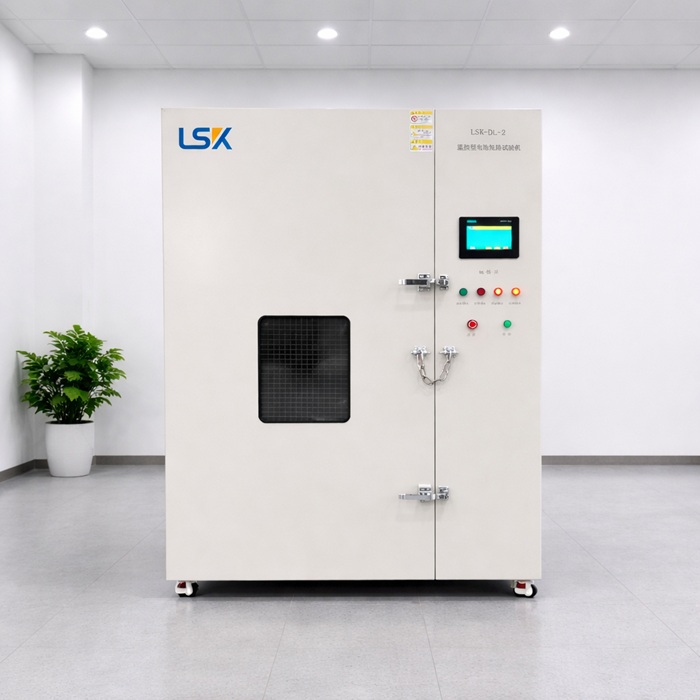
Model: LSK-DL2
The temperature-controlled battery short-circuit test chamber is suitable for lithium primary batteries and other primary batteries, as well as lithium-ion batteries (for digital electronic products such as mobile phones, notebook computers, and cameras), Ni-MH, Ni-Cd, and lead-acid batteries (for products such as power tools, toys, and electric bicycles). In accordance with the relevant requirements of GB8897.4-2002, GB/T18287-2000, IEC 60086-4:2000, IEC 62133:2002, QC/T 743-2006, UL 1642:2006, SN/T 1413-2004, and SN/T 1414.3-2004, it is used to conduct external short-circuit tests.
Application: Used for external short-circuit testing of lithium primary batteries and other primary batteries, as well as lithium-ion batteries (for digital electronic products such as mobile phones, notebook computers, and cameras), Ni-MH, Ni-Cd, and lead-acid batteries (for products such as power tools, toys, and electric bicycles).
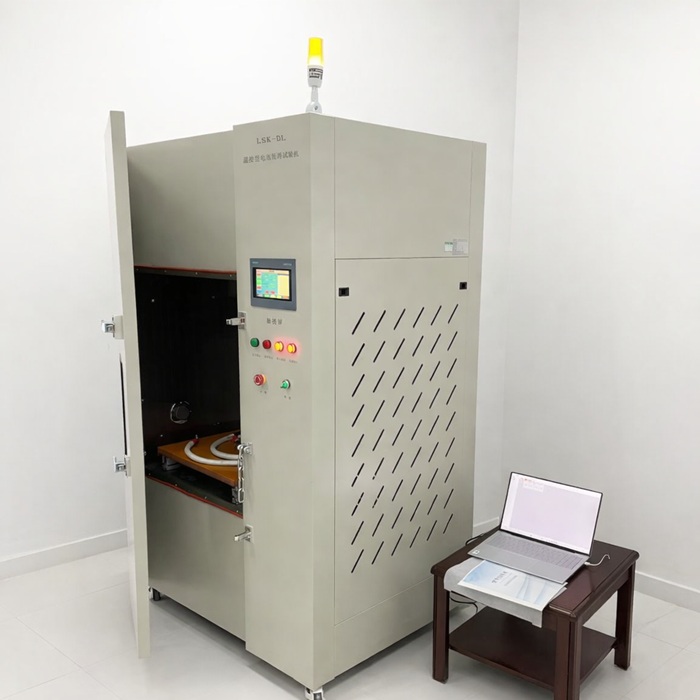
This battery short-circuit test chamber is suitable for lithium primary batteries and other primary batteries, as well as lithium-ion batteries (for digital electronic products such as mobile phones, notebook computers, and cameras), Ni-MH, Ni-Cd, and lead-acid batteries (for products such as power tools, toys, and electric bicycles). External short-circuit tests are conducted in accordance with the relevant requirements of the following standards: GB 8897.4-2002, GB/T 18287-2000, IEC 60086-4:2000, IEC 62133:2002, QC/T 743-2006, UL 1642:2006, SN/T 1413-2004, and SN/T 1414.3-2004.
The requirements for external short-circuit testing vary slightly among the standards above. The battery short-circuit test chamber shall meet all of the following test requirements:
After the battery reaches thermal equilibrium in an environment of (55 ± 2) °C, it shall be subjected to a short circuit at the same temperature with a total external circuit resistance of 0.1 Ω. The short circuit shall continue until the battery case temperature drops back to (55 ± 2) °C, and then shall be maintained for at least 1 hour.
A fully charged battery or battery pack shall be subjected to a short circuit between the positive and negative terminals under an ambient temperature of (20 ± 5) °C or (55 ± 5) °C, with a total external circuit resistance of 0.1 Ω. The short-circuit test shall last for 24 hours, or shall be terminated when the battery case temperature decreases by 20% from the peak value (monitored by thermocouples), whichever occurs first.
Temperature range: RT + 20 °C to 55 °C (optional)
Temperature uniformity: ±2 °C
Temperature fluctuation: ±0.5 °C
Short-circuit stations: 1 channel (optional)
Temperature measurement channels: 1 channel (optional)
Short-circuit resistance per channel: < 0.1 Ω or < 0.05 Ω (optional)
Bottom area of short-circuit test chamber: 600 mm × 600 mm
Max. specimen size: 500 mm
Inner chamber dimensions (temperature control box): not less than 500 × 500 × 500 mm
Observation window: double-layer explosion-proof glass, 300 mm × 300 mm
Max. short-circuit current: 1500 A; max. allowable current: 3000 A within 5 seconds
Overall dimensions: approx. W1250 mm × D1050 mm × H2000 mm (vertical type)